



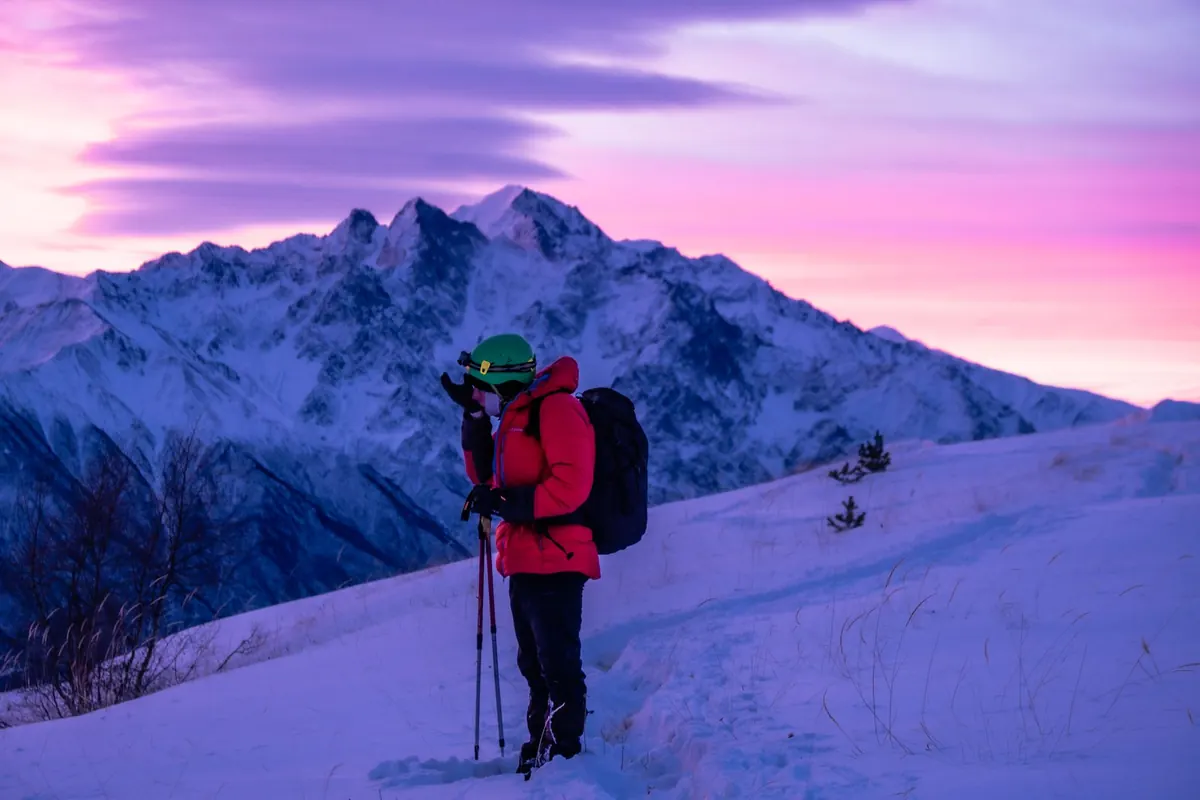
The Cairngorms in winter are spectacular and unforgiving in roughly equal measure. You can leave a car park near Aviemore under blue sky and, three hours later, be walking across a white, wind-scoured plateau with no horizon and no idea which way is north. That's not a reason to stay home. It is a reason to treat the day like an expedition rather than a walk, and to build in some margin for the ways the mountains will push back.
What follows is the checklist worth running through the night before, and again at the car park.
Start with the forecast, not the rucksack
Two services should be open on your phone before anything else. The Mountain Weather Information Service gives a detailed forecast for the Cairngorms, and the Scottish Avalanche Information Service publishes daily avalanche reports for the area through the winter season, with hazard, aspects and the likelihood of triggering slides.
Read wind speed first. It is the single thing most likely to turn a fine day into a hard one on ground above 1,000 metres, and the plateau offers almost no shelter. Gusts in the 40 to 50 mph range make walking a wrestle; stronger than that and you are being pushed off your feet, whatever your fitness. Then look at cloud base, temperature with wind chill, and precipitation type. A forecast of rain at valley level usually means wet snow and rime ice higher up, which builds on rocks, on cairns and on your goggles.
Keep checking
Look again the morning of the trip, and once you are out of the car. Mountain forecasts shift, and a route that made sense at 7am may not at 10am. Have a plan B in your head before you need one.
Plan a route that fits the daylight
Winter daylight in the Cairngorms is short, and in the darkest weeks of December the sun can be down before 4pm. Add in a late start, a slow party, and a navigational detour, and it is easy to lose the light on a high plateau with several kilometres still to go. Build your route around a conservative daylight window, not an optimistic one.
Choose a route with natural turning points and escape options. Long plateau traverses, the Lairig Ghru, or anything approaching Ben Macdui across featureless ground demand good navigation and a settled forecast. Corrie rims and gullies demand avalanche awareness. Ask yourself honestly what the terrain is actually like under the conditions forecast, and whether you have been on it before in similar weather. A slightly shorter day that finishes comfortably is a better day out than a slightly longer one that finishes in the dark.
Tell someone your route, then tell them when you're back
Leave details with a named person, not a house group chat. They need enough to start a search if you do not come home.
- Start point, intended route and finish point, with car park names and vehicle details.
- Who you are with, and their names.
- Planned start time and estimated finish time.
- What kit you are carrying, especially a shelter, and whether you have an ice axe and crampons.
- What to do if you are late: how long to wait, and who to contact.
Text when you set off and text again from the car. Be clear about the difference between late and overdue, and agree a time when they should raise concern. In the UK, the procedure is to call 999 and ask for the police, then for mountain rescue. Use it if it is needed; a genuine concern is never a wasted call. Be aware that the Cairngorms have large signal blackspots, so your planned check-in may not happen, and that should be part of the agreed plan too.
Kit that earns its place in the bag
Winter kit is less about having more and more about having the right things in the right order. Dress in layers you can add and shed without stopping for long, and avoid cotton next to the skin.
- Worn: base layer, mid layer, synthetic or down insulation and a waterproof shell. Hat, buff, insulated gloves, and a second lighter pair.
- Navigation: paper map of the area, compass, and a backup. A watch or GPS unit is useful; batteries drain fast in the cold, so carry spares and keep the device warm.
- Light: headtorch plus spare batteries, even if you are sure you will be down by dark.
- Emergency: a group shelter or bothy bag, a survival bag, a whistle, a small first aid kit and a foil blanket.
- Food and drink: more than you expect to eat, plus a flask. Cold and wind burn calories quickly, and eating is your main fuel.
- Phone: kept in an inside pocket, with a power bank. Cold batteries can drop charge in minutes.
- Footwear and traction: boots stiff enough for the terrain, with crampons and an ice axe if there is snow on steep ground.
Crampons and an axe are only useful if you know how to use them. Get practice on easy ground with someone experienced, or book a winter skills course with a qualified mountain instructor, before the day you actually need the skills. Choosing the right pair of crampons for your boots matters too; step-in bindings need suitable boot welts.
Navigation when the plateau disappears
In a whiteout, the Cairngorm plateau is close to featureless, and the summit cairns are small. Rely on a bearing, not on your instinct, which will drift. Take a bearing from the map, walk it on the compass, count your paces and time the leg. Aim off deliberately so you hit a feature you can identify rather than a point you cannot. Use the terrain under your feet as information: slope angle, snow texture, the direction water would run.
Practise this on a good day, when mistakes are cheap. If cloud comes in and you are unsure of your position, stop, shelter, eat something, and take the time to fix it properly. A few minutes standing still is far quicker than an hour walking confidently in the wrong direction.
If it goes wrong: shelter, food, decision
Most winter incidents are a pile-up of small problems rather than one dramatic event. Cold hands lead to poor navigation, poor navigation leads to a longer day, a longer day leads to exhaustion.
If you need to stop for more than a few minutes, get out of the wind. A group shelter takes seconds to deploy and transforms how warm a group feels. Get insulation underneath you as well as over you. Feed and water everyone. If someone is showing signs of hypothermia, such as uncontrollable shivering, slurred speech or unusual behaviour, treat it as a medical emergency: shelter them, insulate them from the ground and from the wind, and call 999 for help. For anything beyond the basics, follow the advice of the emergency services and seek professional medical guidance.
If the weather or conditions turn worse than forecast, turning back is the right call, not a failure. The mountain will be there next winter.
The night before
Pack the bag in a warm room, not in the car park. Check the headtorch actually works, charge the phone and the power bank, put fresh batteries in anything that takes them, and lay the map out on the kitchen table with the route marked. Confirm the forecast one last time, and send your route details to the person who will worry about you.
Then set the alarm early, eat a proper breakfast, and give yourself the daylight. A calm, well-planned winter day in the Cairngorms, with the light low and the snow crisp underfoot, is one of the best things Scotland offers.
Photo: Матвей Ильин / Pexels